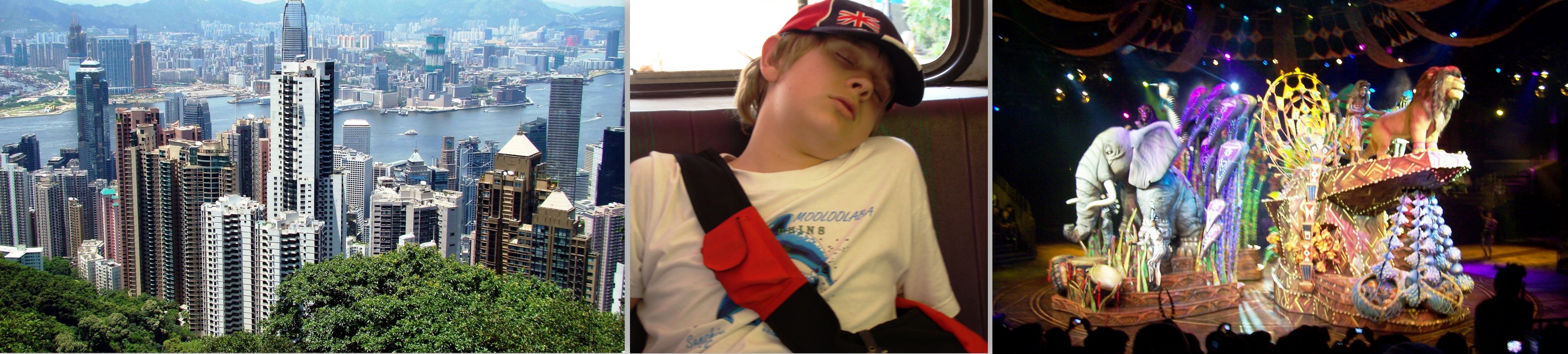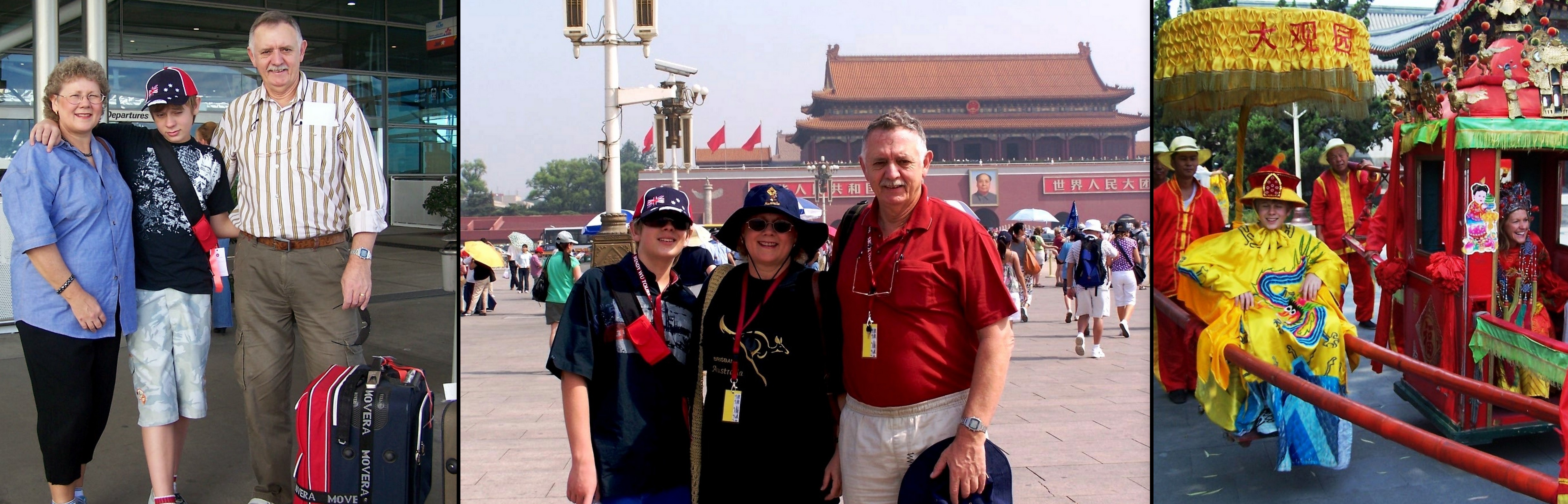
2007 China then Hong Kong
China, officially the People's Republic of China (PRC), is a country in East Asia and the world's most populous country, with a population of around 1.404 billion. Covering approximately 9,600,000 square kilometres (3,700,000 sq mi), it is the third- or fourth-largest country by total area. Governed by the Communist Party of China, the state exercises jurisdiction over 22 provinces, five autonomous regions, four direct-controlled municipalities (Beijing, Tianjin, Shanghai, and Chongqing), and the special administrative regions of Hong Kong and Macau.
For the first part of our tour, it is fully escorted until we arrive at Shanghai
From Brisbane we fly to Beijing
Beijing, formerly romanized as Peking, is the capital of the People's Republic of China, the world's third most populous city proper, and most populous capital city.
Beijing is an important world capital and global power city, and one of the world's leading centres for politics, economy and business, finance, education, culture, innovation and technology, architecture, language, and diplomacy. A megacity, Beijing is the second largest Chinese city by urban population after Shanghai and is the nation's political, cultural, and educational center. It is home to the headquarters of most of China's largest state-owned companies and houses the largest number of Fortune Global 500 companies in the world, as well as the world's four biggest financial institutions
The Great Wall of China is a series of fortifications made of stone, brick, tamped earth, wood, and other materials, generally built along an east-to-west line across the historical northern borders of China to protect the Chinese states and empires against the raids and invasions of the various nomadic groups of the Eurasian Steppe with an eye to expansion.
Several walls were being built from as early as the 7th century BC. These were later joined together and made bigger by Qin Shi Huang (220–206 BC), the first Emperor of China. Little of that wall remains. Later on, many successive dynasties have repaired, maintained, and newly built multiple stretches of border walls. The most well-known of the walls were built during the Ming dynasty (1368–1644).
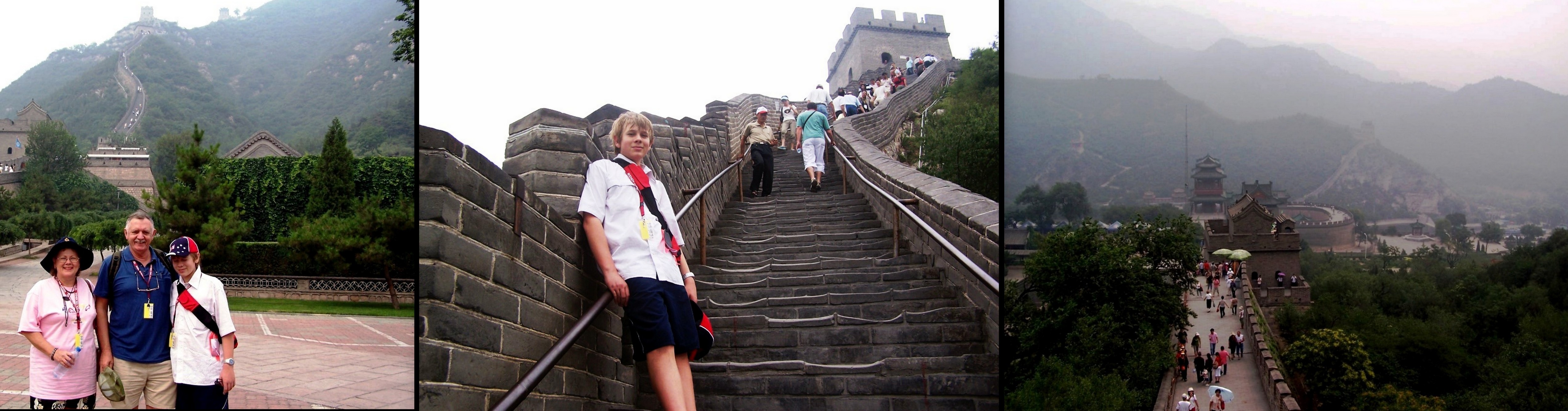
Xi'an is the capital of Shaanxi Province, China. A sub-provincial city on the Guanzhong Plain in northwestern China, it is one of the oldest cities in China, and the oldest of the Four Great Ancient Capitals, having held the position under several of the most important dynasties in Chinese history, including Western Zhou, Qin, Western Han, Sui, and Tang. Xi'an is the starting point of the Silk Road and home to the Terracotta Army of Emperor Qin Shi Huang
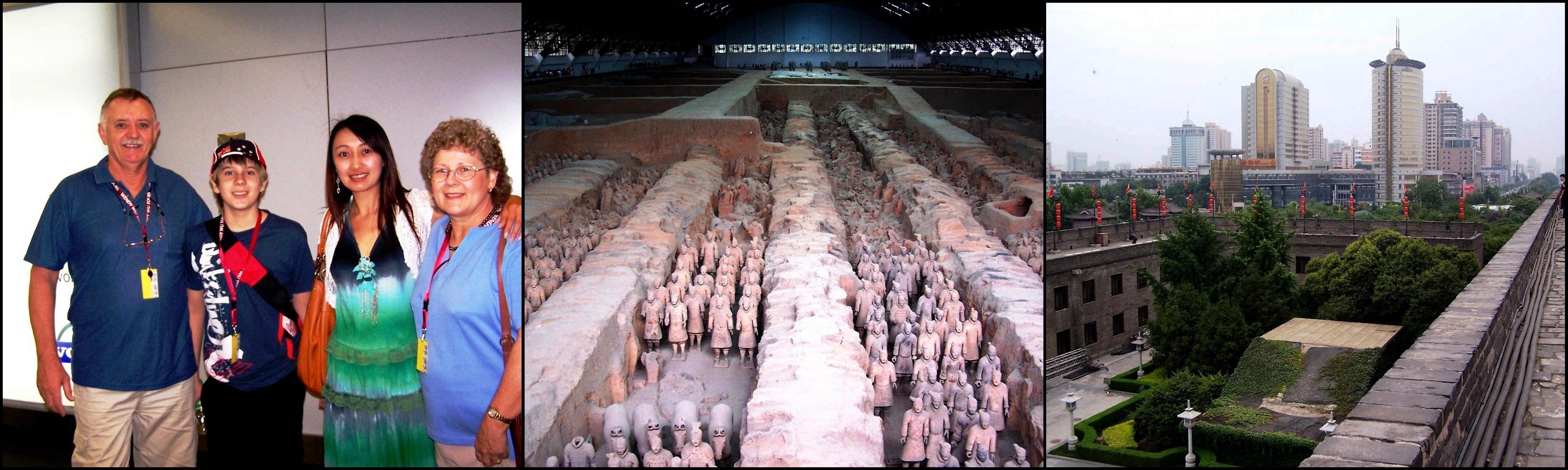
The Yangtze or Yangzi which is 6,300 km (3,915 mi) long, is the longest river in Asia and the third-longest in the world. The river is the longest in the world to flow entirely within one country.
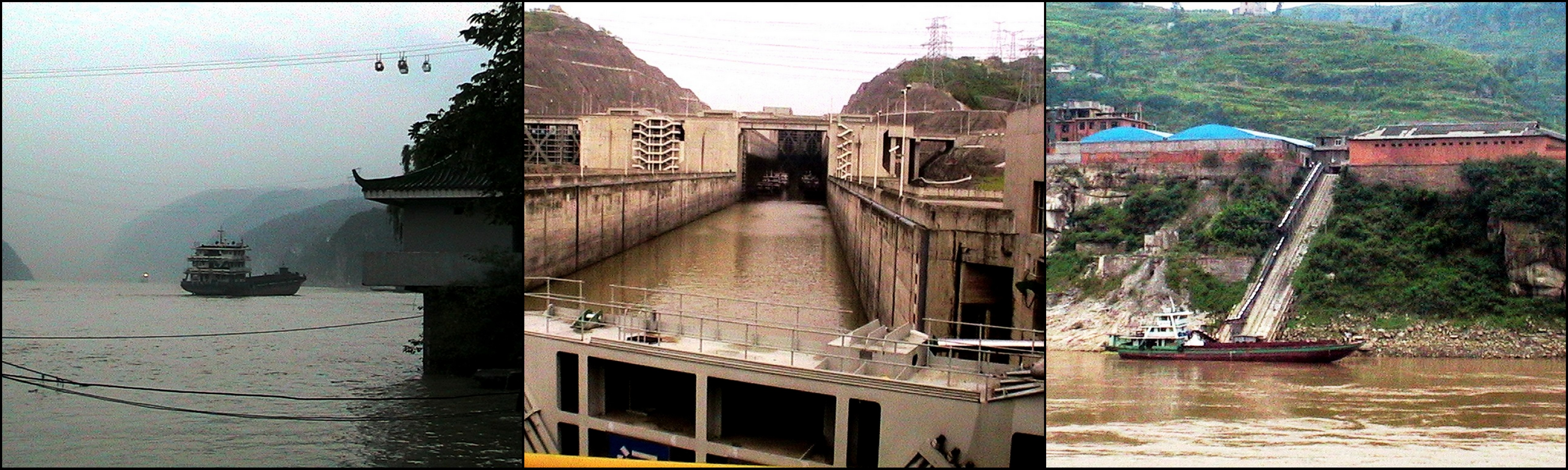
The Chongqing administrative municipality has a population of over 30 million. The city of Chongqing made of 9 urban districts has a much smaller population of 8,518,000 as of 2016 estimation
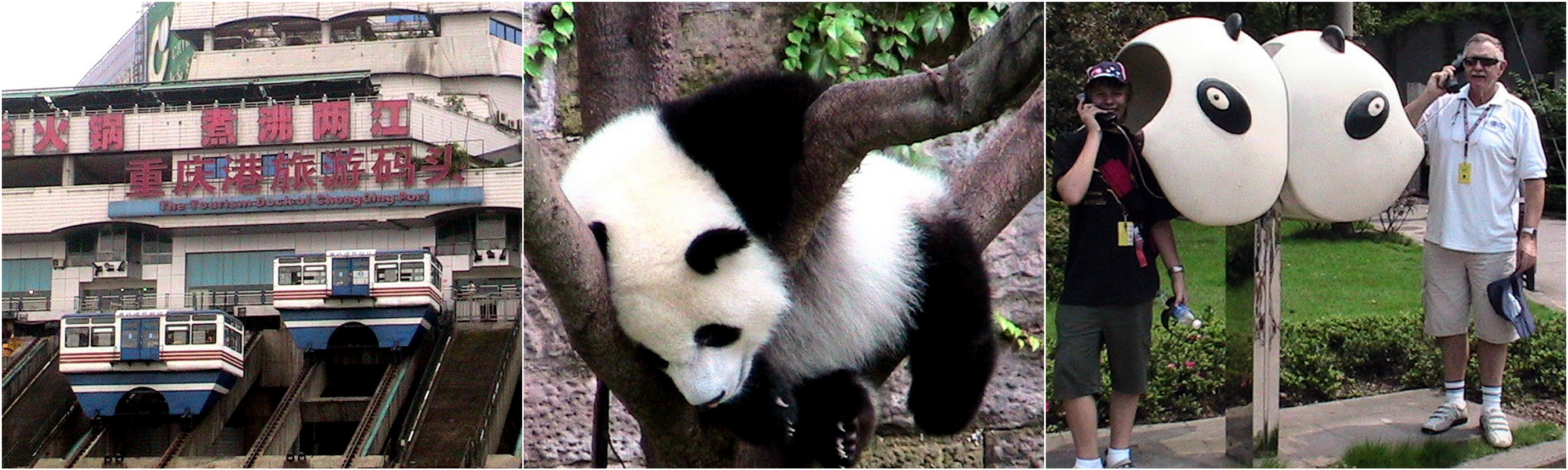
Wuhan, LiJian River and Guilin
Wuhan is the capital of Hubei province, People's Republic of China. It's the most populous city in Central China.
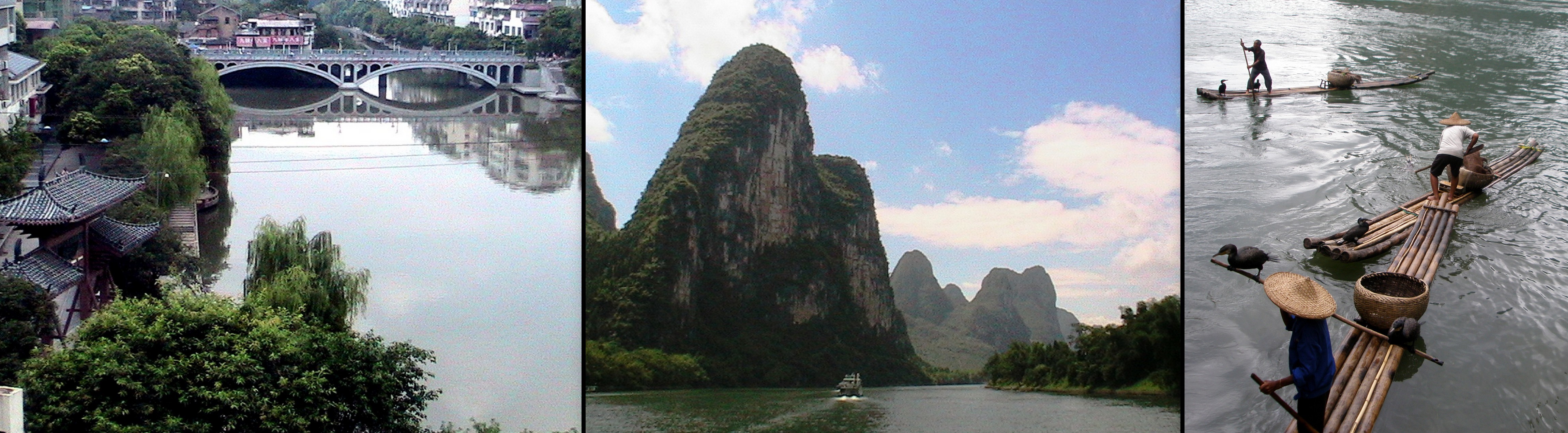
The Li River or Li Jiang is a river in Guangxi Zhuang Autonomous Region, China. It flows 83 kilometres (52 mi) from Guilin to Yangshuo, where the karst mountains and river sights highlight the famous Li River cruise.
Guilin, formerly romanized as Kweilin, is a prefecture-level city in the northeast of China's Guangxi Zhuang Autonomous Region. It is situated on the west bank of the Li River and borders Hunan to the north. Its name means "Forest of Sweet Osmanthus", owing to the large number of fragrant sweet osmanthus trees located in the region. The city has long been renowned for its scenery of karst topography and is one of China's most popular tourist destinations.
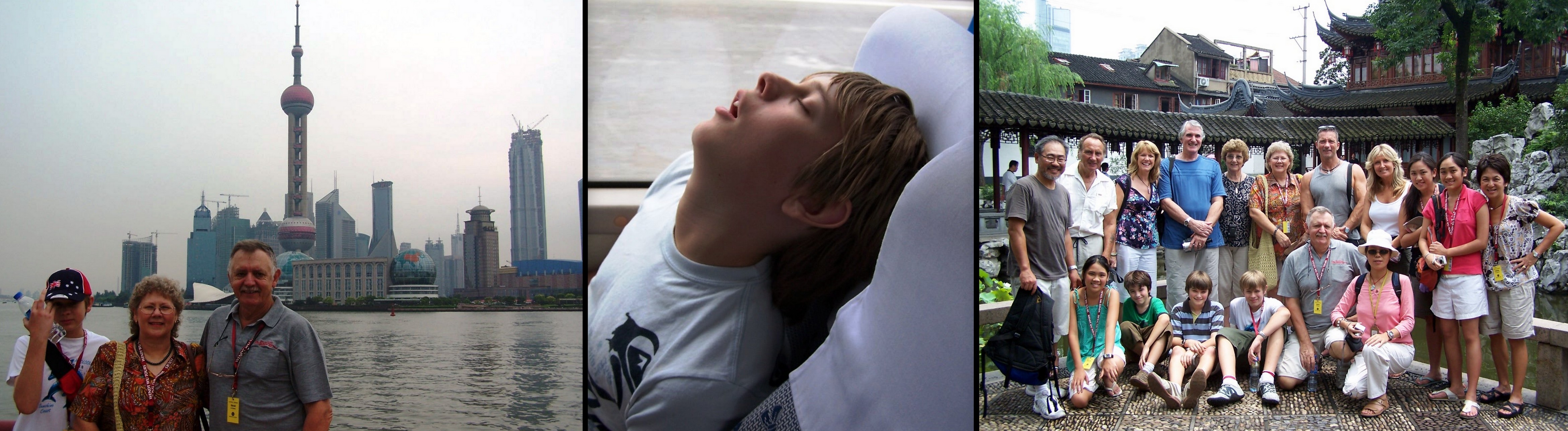
Shanghai is one of the four municipalities under the direct administration of the central government of the People's Republic of China, the largest city in China by population, and the second most populous city proper in the world, with a population of 24.18 million as of 2017. Located in the Yangtze River Delta, it sits on the south edge of the estuary of the Yangtze in the middle portion of the East China coast.
Hong Kong, officially the Hong Kong Special Administrative Region of the People's Republic of China and commonly abbreviated as HK. With over 7.4 million people of various nationalities in a 1,104-square-kilometre (426 sq mi) territory, Hong Kong is the world's fourth most densely populated region.
Hong Kong became a colony of the British Empire after Qing Empire ceded Hong Kong Island at the end of the First Opium War in 1842. The colony expanded to the Kowloon Peninsula in 1860 after the Second Opium War, and was further extended when Britain obtained a 99-year lease of the New Territories in 1898. The entire territory was transferred to China in 1997